
DMC-ODS
DMC-ODS plans are required to implement at least two evidenced-based treatment practices (EBPs) according to the county-specific DMC-ODS County Implementation Plan (DMC-ODS Intergovernmental Agreement). The two EBPs are per provider, per service modality. DMC-ODS plans must ensure providers have implemented EBPs and are delivering the practices to fidelity. The State monitors the implementation of EBPs during reviews, per the DMC-ODS Intergovernmental Agreement.
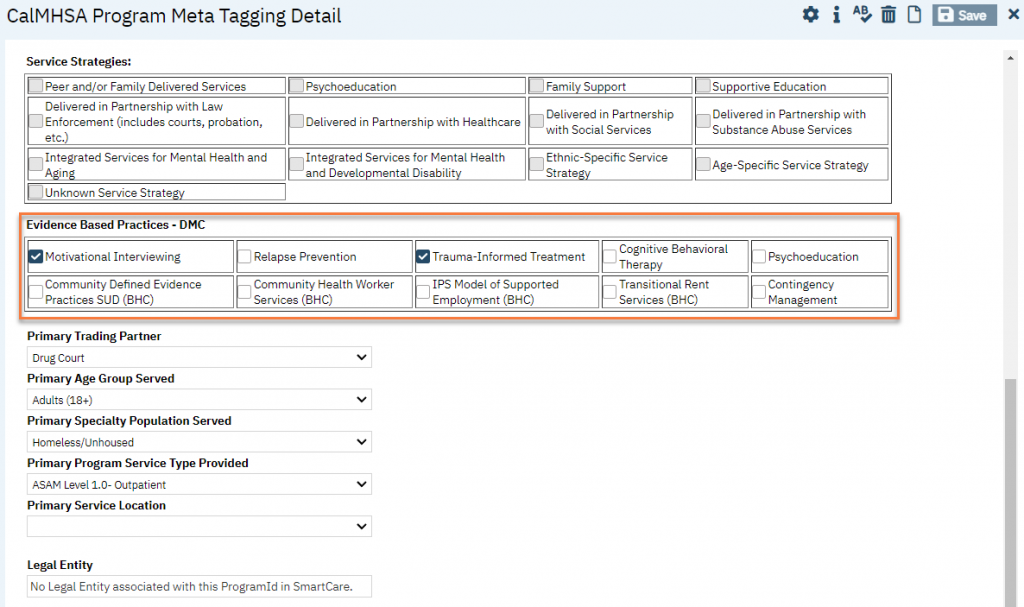
CalMHSA recommends tracking which EBPs a provider uses via the CalMHSA Program Meta Tagging Detail screen in the “Evidence Based Practices – DMC” section. This is a multiple-select field and includes all the EBPs included in BHIN 24-001 and reflected in the DMC-ODS Intergovernmental Agreement. This allows a county to select the two EBPs per provider, per service modality.
SMHS
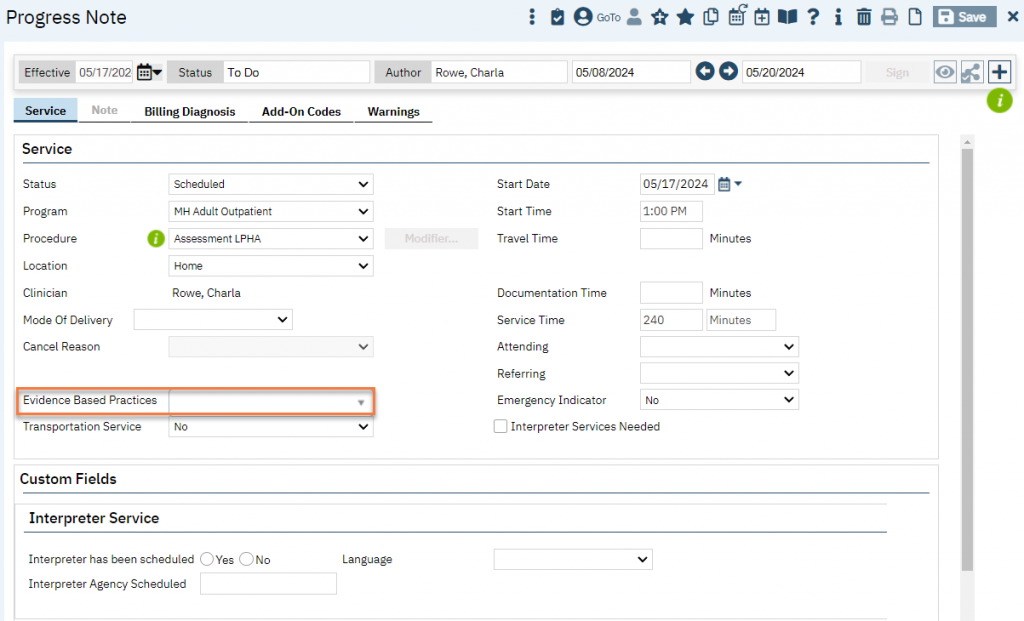
For Specialty Mental Health Services, providers must report on Client and Service Information (CSI). This requires SMHS providers to document any EBPs used, up to three, on a per-service basis. CalMHSA has ensured that this is trackable using the Evidence Based Practices field in the Service Note screen. This field is multiple-select so that the provider can select up to three CSI EBPs for their service reporting.
BH Connect
As counties prepare for implementation of new evidence-based practices (EBPs) questions may arise about documentation requirements, billing, workflow impacts, and SmartCare readiness. While some implementation details are still being finalized at the state level, work is actively underway, and there is time to prepare.
- SmartCare Support for EBP Implementation
- SmartCare is actively preparing for the billing and claiming impacts associated with new EBP services. Current efforts include testing bundled-rate billing configurations where requirements have been defined, validating system functionality to support compliant claiming processes, and monitoring state guidance as additional information becomes available. If your county has opted into BH CONNECT please be sure to open a Hubspot ticket.
- Billing Requirements Continue to Evolve
- For several EBPs, the Department of Health Care Services (DHCS) has not yet finalized all billing and claiming requirements. Where guidance is available, SmartCare is actively working to support those requirements. Where guidance is still pending, implementation planning is underway, and updates will be communicated to SmartCare counties by CalMHSA as soon as additional direction is provided by the DHCS.
- APIs and System Integration
- We recognize there is significant interest in automated integration between SmartCare and Centers of Excellence (COE) systems. At present, there are no established integrations or APIs available that would allow automatic exchange of EBP documentation and data between SmartCare and COE platforms. While future integration opportunities may be explored, development of secure and sustainable system-to-system connections requires significant planning, technical coordination, governance, and funding. If there are additional API details to share, we will provide them in future communications.
- Documentation within COE Systems
- At this time, SmartCare is not planning to recreate or duplicate the forms/documents required by individual COEs. Counties should expect to meet those requirements through the COE-designated processes. Additional information can be found at BH COE Resource Hub.
- Double Entry Challenges are Known and Being Elevated
- We understand county concerns regarding duplicate data entry and the need to document information in both SmartCare and COE systems. These operational challenges are being actively raised through county advocacy channels, including discussions between the County Behavioral Health Directors Association and DHCS.
- Work Directly with Applicable Center(s) of Excellence
- For any EBP that your county has elected to implement, the primary source of guidance is the applicable COE. Each COE establishes its own requirements related to training, implementation, fidelity monitoring, data collection, documentation, timelines, and reporting. Counties should continue working directly with their COE(s) to understand expectations and implementation requirements.
- Fidelity Expectations
- While DHCS has established a phased approach to fidelity implementation for EBPs, with fidelity designation levels that include Baseline, Minimum, and Full Fidelity. Importantly, DHCS does not expect all teams established after fiscal year 2026-27 to achieve Full Fidelity designation by June 2029. Rather, new teams are expected to progress through the fidelity designation levels in accordance with the requirements and timelines outlined in the applicable implementation manual. For the most current information regarding fidelity expectations, counties should review the EBP Technical Assistance, Fidelity Monitoring and Data Collection Policy Manual – April 2026 and consult directly with their applicable COEs.
Key Takeaways
- Counties should focus on: 1) engaging directly with their applicable COE(s), 2) understanding COE-specific implementation and documentation requirements, and 3) monitoring communications from CalMHSA regarding billing and claiming guidance. CalMHSA will continue to provide billing-related updates to SmartCare counties as additional guidance becomes available from DHCS.
Considerations
CalMHSA has received many requests from counties to add the DMC-ODS EBPs to the Evidence Based Practices field in the service note, even though this field is meant for CSI reporting. CalMHSA does not recommend adding values to this field. It is unclear what impacts to CSI reporting these types of changes may have. Additionally, the requirements laid out in BHIN 24-001 do not require tracking of EBPs on a per-service basis for DMC-ODS.
In addition, at this time BH Connect information will also NOT be added to the Evidence Based Practices field in the service note in SmartCare because we’re still working on how all of these will be tracked.